
Bays, bows, single-hung, casements, awnings, oh my! When looking for replacement windows it can be confusing to understand differences across types, especially when they look so similar!
One of the most common questions we get starts something like “single-hung and double-hung look the same – what’s the difference?” While they look similar, they function quite differently — and understanding those differences can help you make the best choice for your home.
🪟What’s the Difference?
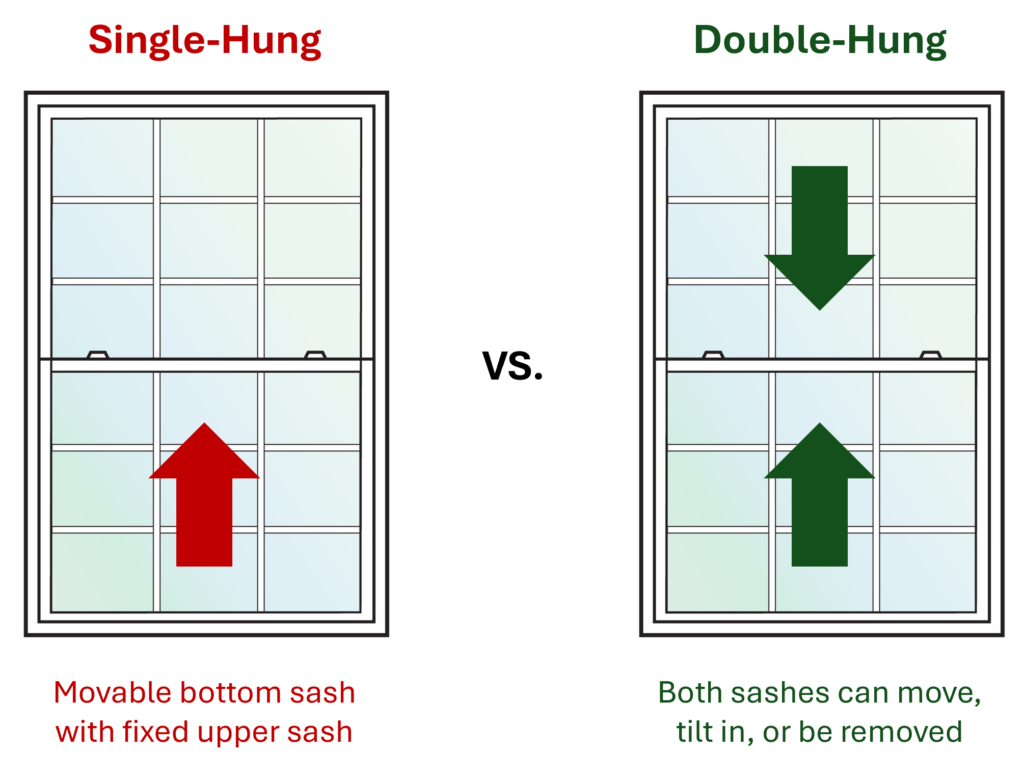
✅ Pros and Cons of Single-Hung Windows
Pros:
- Traditionally a more affordable option
- Simple design with fewer moving parts
- Good for lower floors where outside access makes cleaning easier
Cons:
- Top sash can be hard to clean from inside
- Less ventilation flexibility
- Not ideal for upper stories or hard-to-reach places
✅ Pros and Cons of Double-Hung Windows
Pros:
- Easier to clean from inside — great for upper floors
- Better air circulation (open both sashes)
- Safer for kids and pets (open top sash only)
Cons:
- Slightly more expensive
- More moving parts means more wear over time (important to choose windows with high-quality systems for durability)
🧠 Which Is Right for You?
- Go with single-hung if you’re looking for a more budget-conscious option or for ground-floor windows or areas where cleaning is easy from outside.
- Choose double-hung if you want top-tier functionality, ease of maintenance, and improved ventilation — especially on upper floors.
And remember: whichever you choose, quality matters more than style alone. A well-built single-hung window will outperform a cheaply made double-hung every time.
Need Help Deciding?
If you’re still unsure, we’re happy to help. Our experts walk you through every option with no pressure — just honest advice from people who care about doing the job right.
Schedule your free consultation today and let’s find the perfect fit for your home and your budget.


One Response
Informative article, totally what I was looking for.