
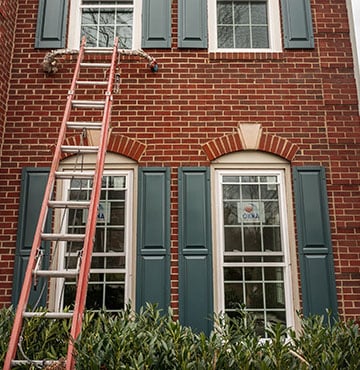
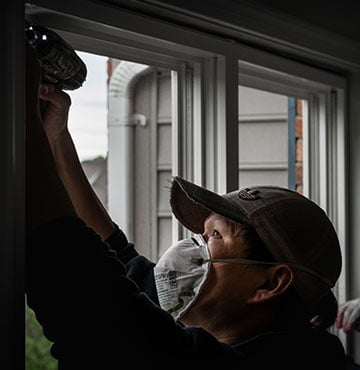
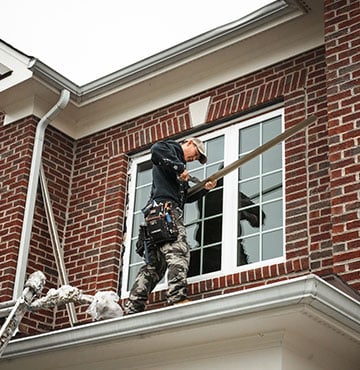








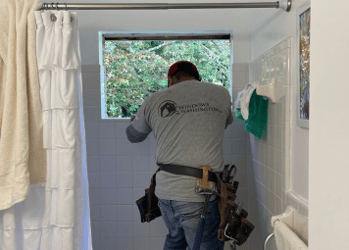
At Windows on Washington, we are extremely proud of our Team. Here is is what our customers are saying about their experience with us. Do you also want to experience the WoW Factor!!!

Thank you so much for helping us out with that window. I just couldn't be more delighted with your company. It was so nice of you to help out with a window that you didn't even install! If you ever want to use us for customer testimonials, we would be happy to gush about how great Windows on Washington is! And we will be sure to use your company for any future needs.
Gratefully,
Mary and Harold - Vienna
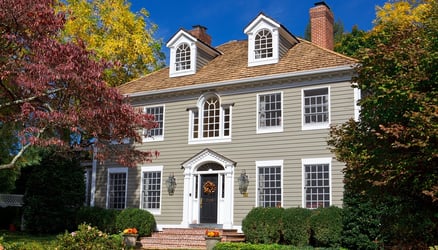
Just a follow-up to our phone conversation today to again express our thanks to you, the install crew, and everyone at Windows On Washington for a job very well done. Everyone on the install crew was very professional, courteous, and very talented. This sort of project innately requires a fair amount of disruption and they made every effort to keep it to a minimum. This was not what we would call an easy job, particularly the full capping of the dormers, and we are thrilled with the result. Even our neighbors are in awe as to how well it was done! Please pass on our sincere thanks to everyone involved.
Best Regards,
Tom and Julie - Vienna
At Windows on Washington, we know that no two customers or new roofing projects are the same. This is why we offer many different manufactures to help you find the right solution for your new roof. A knowledgeable contractor works closely with manufacturers to ensure whatever roofing system you choose is installed according to the manufacturer’s suggested best practices. Here is a sampling of the highly regarded roofing system manufacturers we work with:
Decra
Decra offers quality materials with a proven track record. Decra, the original stone coated steel roofing system, represents over 50 years of research and practical experience. Decra offers the ultimate in performance and engineering design giving you lasting Roofing solutions. Decra offers many style options like Tile, Villa Tile, Shake and Shingle with all of the benefits of metal roofing.
Certainteed
CertainTeed Roofing offers great roofing options including Landmark Solaris, an energy-saving breakthrough that puts cool roof technology to work. Landmark Solaris is a steep-slope, solar reflective asphalt roofing shingle which contains advanced colored granules that reflect the sun’s rays and can reduce a roof’s temperature by as much as 20% in the summer months. Landmark Solaris is an advanced hybrid roofing material that marries the traditional beauty of asphalt shingles with the environmental benefits of cool-roof technology. The result is a long-lasting ENERGY STAR® rated product.
Englert
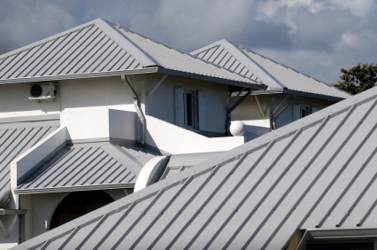
Englert makes some of the best standing seam metal roofing material on the market today. They coat their metal with Energy Star, LEED-compliant coatings and many of their metal roofing products meet or exceed the top requirements for wind uplift and fire resistance ratings. If you are considering the addition of solar panels on your roof, an Englert metal roof is an ideal platform for their solar energy and solar thermal roofing products.
Classic Metal Roofing Systems
Classic Metal Roofing Systems is a leading manufacturer of residential metal roofing. Classic Metal Roofing Systems has designed their products with a focus is on increasing your home’s value and protection, making your roof worry-free and your home comfortable. They offer many metal roofing styles, from the charm of wood shakes, the popular look of architectural shingles, or traditional Standing Seam, all in beautiful, energy efficient, lifetime metal. Some great products include Oxford Shingle, Rustic Shingle, Country Manor Shake and Clicklock Standing Seam.
Malarkey
Malarkey Roofing Products has operated as a family owned company since 1956. At Malarkey Roofing, they work to create long-term value for homeowners. Their commitment to excellence propels Malarkey Roofing to new advances in polymerization and the development of long lasting products. Malarkey maintains a solid commitment to affordable, dependable roofing. With products including high profile laminate shingle, 3-tab shingles and solar reflective shingles, you have a nice range of color and style choices.
Firestone
With a wide product offering that includes single-ply, metal and asphalt-based system solutions, Firestone is your provider of innovative products with outstanding warranty coverage. Design enhancement, energy efficiency and ease of use are just some of the features Fires- tone Metal Systems provide. Firestone offers a diverse product line of base sheets, ply sheets and cap sheets along with installation tools to give you a single source for quality asphalt-based roofing materials.
When deciding on a new roof, it's important to work with a contractor that is able to offer many different manufactures and roofing systems to find the perfect solution for your home. The experts at Windows on Washington will give you a factual breakdown on the different manufacturer and roofing types so you can make a fully informed decision. Contact WoW today for more information.
When Is It Time to Replace Your Home’s Windows?
Are your windows still doing their job or are they on their last leg? Every part of your home has a lifespan and your home’s windows are no exception. How do you determine whether it is time to replace your home’s windows? You should consider window replacement if you are experiencing any of the following:
1. You have growing heating and cooling bills.
One of the reasons that homeowners decide to replace their windows is a lack of energy efficiency. Advancements in technology and breakthroughs in manufacturing in the past 20 years have given homeowners many high quality, energy efficient choices. Quality replacement windows will offer most homes significant energy savings.
2. It is difficult to open and close windows.
Windows that are difficult to open or close are an indication that your windows may have reached their maximum life span. Water damage, warping and wood rot all negatively impact operation, which most often cannot be repaired. Replacement is the best option in this case.
3. Your existing windows are single-pane.
Single pane windows lack many of the features newer double or even triple pane windows offer, chief among them energy efficiency. Double pane windows are insulated and the cushion of inert gas maintained between the two panes of glass keeps in heat during the winter and AC inside during warmer summer months. Installing double pane windows will make a big difference in your energy bills, noise reduction and maintaining your home’s comfortable temperature. For the utmost in fuel or energy savings, triple pane offers even better performance.
4. There is noticeable condensation or fogging between panes.
When you see condensation or fogging between your existing window panes, this is an indication that the window’s seals have failed. Depending on the age and operability of the window unit, many times replacement is the only option.
5. Your home feels especially noisy or drafty in the winter and overly warm in the summer.
The right replacement windows will reduce the amount of outside noise you hear in your home. Likewise, highly energy rated windows will eliminate drafts and cold spots while window coatings will reduce sun exposure that can age furnishings and quickly make a room too warm.
6. There is wood rot on or around windows.
If there is visible rot on or around one or more windows, they should be replaced. Often, homeowners then choose to replace all of their home’s windows at the same time to maintain consistency and curb appeal.
7. Your existing windows are difficult and time consuming to maintain.
At times, the upkeep associated with older windows is just too much. Many homeowners tire of repainting or repairing windows every few years and are searching for an alternative that will preserve the look of their home without the added upkeep.
Homeowners in Northern Virginia and Maryland trust their homes to the experts at Windows on Washington. This locally owned company has won numerous awards for service excellence, including Angie's List Super Service Awards for 2010, 2011 and 2012. Do you want to improve the energy efficiency, comfort and beauty of your home? Call the Experts at Windows on Washington today for solutions to all your home improvement needs.
A Checklist For A Quality Roofing Contractor
All roofing contractors are not alike. It is important to prequalify roofing contractors to get the job done right the first time. Doing a little work upfront will save you hours of distress and potentially thousands of dollars later.
Fly-by-night contractors are typically uninsured and work with cheap, untrained and ill-supervised laborers. They will often use your roof as a training exercise to figure out how to put a roof on and will come to you later asking for more money to finish a job that isn’t correct to begin with. By shopping professional, local, established roofing contractors, getting multiple estimates from companies with a proven track record and weighing your material options, you can get a quality roofing system, professionally installed at a fair price and add value, security and comfort to your home.
We cannot stress enough - you need to understand the nature of low bids. No one likes to pay more than they have to, especially when it is a large investment like a roofing system. A low bid can seem really attractive and it can be significantly less than other bids from your vetted professional roofing contractors. The simple truth is, if it sounds too good to be true, it probably is. Roofing systems are expensive because the hard cost of the materials, the trained, professional labor required in a proper installation and the insurance required to cover workers and protect homeowners from litigation. There’s no (right) way around this.
So what qualities and requirements should you look for in a contractor? Use our handy checklist to make sure you choose a true professional.
- Permanent place of business, telephone number, tax id number & business license
- Proof of insurance - liability coverage & workers' compensation certificates
- Licensed and bonded
- Ensure the contractor is financially stable
- Company has proven track record, client references & a list of completed projects
- Detailed, written proposal with descriptions of the work & specifications, approximate starting and completion dates and payment procedures
- Contractor is a licensed or approved applicator with manufacturer
- Contractor should be able to explain his project supervision, quality control procedures, size of the crew and estimated project completion time
- Contractor demonstrates a commitment to professionalism with appropriate industry associations
- Check with Better Business Bureau or Department of Professional Regulation for possible complaints filed against the contractor
- Contract & roofing warranties offered for labor and materials
When deciding on a contractor for a new roof, you would be well served by visiting with a
straightforward contractor who meets the qualifications listed above.
Windows on Washington carries an array of different roofing materials and can give you a factual breakdown on the different types to make the best decision for your home. Contact the experts at
WoW today for more information.
Understanding Home Lighting Options
Florescent, compact florescent, incandescent, and halogen light bulbs are all commonly found in homes across the country. Specific bulbs will serve a specific purpose throughout your home, as each of these light bulbs comes with pros and cons. If you feel the lighting in your home is insufficient, or you simply want to be more eco-friendly, here is a breakdown of these light bulbs and how they can best be used in your home.
Florescent
While most florescent bulbs are large, rectangular bulbs that fit directly into ballasts designed to house them, they do come in a wide variety of shapes and sizes. The florescent ballast will hold your light bulb in place while regulating the amount of power, or energy, which is sent to the bulb. Florescent light bulbs attempt to replicate natural daylight, and produce a cold, flat blue light. Unfortunately, many people find this type of light to be rather harsh on the eyes, and these bulbs are not compatible with a dimmer switch, meaning what you see is what you get. Great for larger rooms such as an attic or basement, florescent lights, however, are not the ideal choice if you are working on a lighting project.
Compact Florescent
Among the most energy-efficient light bulbs on the market today, the compact florescent (CFL) bulb is not equipped with a heating filament to generate light. Instead, the CFL bulb uses electricity as a means to hear mercury vapor contained within the bulb. The heating of this mercury vapor will initially produce ultraviolet light, and shortly thereafter will produce visible light. CFL bulbs use approximately 75% less energy than traditional light bulbs and will last around six times longer, according to EnergyStar. It is important to note that compact florescent bulbs will require you to invest more up front, but you are sure to make that money back in the long-run, provided the bulbs aren’t dropped before they need to be replaced.
Incandescent
Incandescent light bulbs are the most commonly used bulbs in households across the United States. One of the main reasons this is the case is due to their low cost. Incandescent light is often warm and inviting, and is known to complement skin tones. Unlike florescent bulbs, incandescent bulbs can be used with a dimmer switch, which can extend their life expectancy beyond the typical 1,000-hour life expectancy. If you are looking for environmentally-friendly lighting options, however, the incandescent is amongst the worst bulbs for this purpose.
Halogen
A variation of the incandescent bulb, halogen light bulbs are known for their ability to nearly duplicate natural sunlight. Halogen bulbs produce what is known as “white light,” which helps colors appear sharper in halogen light. Capable of being paired with a dimmer switch, halogen bulbs are more energy-efficient than traditional incandescent bulbs, though they burn at a much higher temperature and are more expensive. Halogen light bulbs must be handled with extreme care, and should not be used in a fixture that is within reach of a child. Most often used beneath cabinets and in recessed cans, halogen lights cannot operate with the natural oils from your skin upon them. The smallest amount of oil can create a hot spot on the bulb, which can cause it to explode and shatter when turned on.
Lighting accounts for approximately 10% of your household energy costs, which can easily cost up upwards of $200 a year. This may not seem like a big expense, but it is enough to make you reconsider your lighting options. With the proper research and planning, you can illuminate your home while reducing your utility costs and reducing your carbon footprint. Take control of your home lighting today and choose the right bulb for the job.
Windows on Washington would like to thank Rachael Jones for guest blogging. She is a blogger for DIYMother.
Our project of the week is a new window replacement that had extensive wood rot in Riverdale, Maryland. Wood rot occurs when moisture penetrates the wood around the window frames, and can happen when the window material itself is vinyl, metal or wood. Water enters the window frame through cracks in the wood that are not properly sealed, through the natural joints of the frame, or through the cracks and crevices of old, decaying caulk.
Either way, as soon as wood rot is identified it is time to act. A small amount of rot can often be repaired by replacing the caulking or digging out a small amount of wood rot and replacing it with epoxy. However, as was the case for this customer, the wood rot was so extensive that it surrounded the entire window. A full window replacement and re-framing was needed to solve the problem.

Windows on Washington began by removing the old wooden window, which showed just how rotten the frame had become. It's very important to remove all of the decayed wood to prevent mold, additional rotting and potential leaks. Some unskilled or lazy contractors won't take the time to do a full removal, instead opting to put the new window into the damaged or rotted frame to save time and money. These shortcuts always lead to more problems down the road.
Once the opening was free from the wood rot, we re-framed it with new wood and lined it with Flex Wrap (TM). This wrap is a flexible self-sealing flashing that prevents moisture from entering the window opening. At Windows on Washington, we believe that this flashing is a must to protect the bottom corners of sills where water damage is most likely to occur. Again, many contractors cut out this step for convenience or cost savings.
Finally, we replaced the window with a new Starmark 900 window and all new trim. The trim has been properly sealed to prevent any damage that may be caused by moisture. The result is a structurally sound, energy efficient, beautiful new window.

Homeowners in the Northern Virginia, Maryland and Washington, DC area can trust their home improvement projects to the experts at Windows on Washington. This locally owned company has won numerous awards for service excellence, including Angie's List Super Service Awards for 2010, 2011 and 2012. This award honors contractors who provide the best value for homeowner investment.
Would you like to experience the Wow! Factor for your self? Do you want to improve the energy efficiency, comfort and beauty of your home? Contact the Experts at Windows on Washington today for solutions to all your home improvement challenges.
As you prepare for an estimate appointment for your new roof, you should familiarize yourself with some key terms. Understanding basic roofing terms will allow you ask more in-depth questions to the companies competing for your business. In an effort to support your research, Windows on Washington has put together the following list of many important terms commonly used by roofing contractors.
Understanding the Basic Roof System Components
Most roof systems are comprised of these five essential components:
Drainage - A roof features elements like shape, slope and layout that impact your roof’s ability to shed water.
Flashing - Sheet metal and other materials referred to as flashing are installed into a roof system's various joints and valleys to prevent water from seeping in.
Roof coverings - This can include shingles, tile, slate or metal along with an underlayment that protects the sheathing from exposure and weather.
Roof Structure - Rafters and trusses make up the roof’s structure and are constructed to support the sheathing.
Sheathing - This includes the boards or sheet materials that are fastened to the roof’s rafters to cover your house or structure.
Other Useful Roofing Terms:
Architectural Shingles - shingles made from fiberglass and asphalt that are laminated or textured to give them an attractive 3D look.
Closed Valley - an area of the roof where the shingles are installed over the valley flashing, so that the metal is not exposed.
Collar - a flange placed over a stack type vent to seal the roof around the pipe.
Dormer - a small, decrative structure projecting from a sloped roof that usually has a window.
Eave - the horizontal lower edge of a sloped roof that overhangs the exterior wall of the home.
Fascia - the vertical roof trim is found just under the roof where it covers the rafter tails.
Ice Dam - ice formed at the lower edge of a roof that is caused by the thawing and re-freezing of water.
Ice & Water Shield - a self-healing, impenetrable roofing membrane installed under shingles to prevent water from forming an ice dam.
Roofing Square - 100 square feet of roofing material.
Roof Ventilation - a system for removing hot air and moisture from the attic area, which is important to the roof's ability to maintain an even inside temperature level and prevent any damage to the new roofing system.
Soffit - the finished underside of the eaves.
At Windows on Washington, we provide our customers with quality products and expert workmanship to improve the comfort, beauty and energy efficiency of their homes. And we do it with unparalleled service. Our work is not complete without your total satisfaction. If you have any questions about your roofing project do not hesitate to call our experts at 703-378-1190 or click the link below.
Insulation works to inhibit the transfer of heat. In the winter, it prevents cold air from the outdoors from penetrating the interior of a house, helping keep the home warmer inside. During the summer, insulation helps trap cool, conditioned air inside the home while resisting heat from the outdoors. Thus, it is one of the most important features of an energy-efficient home. It goes a long way towards improving comfort by maintaining a constant indoor temperature while reducing the frequency and duration of HVAC system operation.
There are four standard types of insulation - blanket, polyurethane and polyisocyanurate, loose fill and rigid as well as two specialty types - fine fibers and reflective insulation. With six types of insualtion and countless manufactures it's difficult to compare them against one another. The best way to differentiate insulation brands within their own categories is to compare them with their assigned "R-value". The R-value expresses the insulation’s ability to inhibit heat transfer, with higher R-values indicating greater effectiveness.
It is important to understand how to read the label attached to an insulation product. The R-value must be clearly displayed, according to federal law, if the insulation is a multi-layered product all layers must be rated separately.
R Value Guidelines
The insulation industry has also created standardized guidelines by geographical location so that consumers know what R-values to install in specific areas of their homes. Washington, DC has a “mixed” climate, with heating and cooling needs in the “moderate” range.
In homes which have electric heating, the following minimum R-values are recommended:
- Ceiling: R-38
- Wood-frame wall: R-11 to R-22
- Floor: R-13 to R-25
- Basement or crawlspace walls: R-11 to R-19
- Attic ducts: R-4 (return ducts), R-8 (supply ducts)
- Basement or crawlspace ducts: R-2 (return ducts), R-8 (supply ducts)
In homes which have oil, natural gas or heat pump systems, the following minimum R-values are recommended:
- Ceiling: R-49
- Wood-frame wall: R-11 to R-28
- Floor: R-25
- Basement or crawlspace walls: R-11 to R-19
- Attic ducts: R-4 (return ducts), R-8 (supply ducts)
- Basement or crawlspace ducts: R-2 (return ducts), R-8 (supply ducts)
As a general rule of thumb, insulating towards the higher end of the given range is recommended. The investment made in superior insulation will pay dividends for years to come, in the form of sustained energy savings and increased comfort.
Windows on Washington specializes in creating customized air sealing and insulation strategies to increase your home’s efficiency, decrease heating and cooling costs, and maximize your return on investment. Contact us for solutions to improve the comfort level of your home!
There are many benefits to a new roofing system. Some homeowners balk at the cost of a roof, especially if they are planning on selling their home. Yes, a roof is a significant investment, but like any sound investment, there are returns. Here are the top 6 benefits that you can expect when your replace your roof with Windows on Washington.
Return on Investment (ROI)
Combined estimates put a quality roofing system ROI at approximately 70%. This means that you will recoup around 70% of each dollar spent on this particular home improvement when you sell your home. Because a new roof has a likely lifespan of 20 or more years, it is worth investing in quality materials and expert professional installation from the start. Spending wisely once to secure the best materials and most proper installation means no additional, unforeseen expenditures down the road.
Energy Savings
In addition to your return on investment, when considering a new roofing system, there are a number of other factors to take into account. A professionally installed roofing system from a trusted manufacturer can help you significantly reduce your energy costs and make your home more comfortable. Some of today’s quality roofing systems have increased insulating values. Likewise, “cool” roofing options from manufacturers like Englert, Certainteed Solaris, Firestone, Decra and Classic Metal Roofing Systems can increase your heat deflection and save you even more money in energy costs.
Comfort Level
One of the most important things your roof does is keep the temperatures within your home stable and comfortable. An old roof is far less likely to do its job to keep warm air in during colder winter months and keep your home cool during the warmer summer months. This can increase your energy cost significantly in just one season not to mention the compounding long-term costs.
Safety and Security
Beyond return on investment and energy savings, there are also safety issues. Old roofs nearing the end of their usable life may present some possible safety hazards like water damage and the associated risk of health compromising mold and mildew. Additionally, an old roof is far more likely to suffer significant damage during inclement weather like high winds, heavy snowfall or a severe storm.
Curb Appeal
A structurally sound roofing system using the best available materials is an investment in your family’s home. A nice looking and expertly constructed roof can add to the curb appeal of your home for your own enjoyment or when you are selling your home. A quality roof installed by a reputable roofing contractor will help you stay safe, comfortable and may reduce your energy costs.
Warranty
A professionally installed roof with a strong warranty is a great feature and provides added value when selling your home. In today’s competitive real estate market, features that add value and curb appeal can make all of the difference when it comes to listing price, selling price and how quickly a home is sold. An aging roof is a very hard sell for any potential buyer because of the fear of being saddled with a costly, unplanned repair after the significant expense of purchasing a new home.
Want more information on different types of roofing and the benefits of each? Call the experts at Windows on Washington today and let us help you navigate through your roof replacement project.
Many homes have numerous sites where cracks or gaps allow for the exchange of indoor and outdoor air. While these gaps are typically most noticeable during the winter when cold air seeps into the home, they can cause problems all year round. These problems aren’t just limited to energy efficiency.
The air sealing process locates and permanently closes these gaps to create an airtight envelope around the house, preventing the exchange of air and facilitating more efficient heating and cooling.
While windows and doors are the most noticeable sites where air leaks commonly occur, there are many other places where they can happen, particularly in attics and basements.
The following areas should also be monitored.
- All exterior walls, particularly in corners
- Attic hatches
- Attic knee walls
- Wiring holes and electrical outlets
- Plumbing vents and air vents
- Open soffits
- Recessed lights
- Points in the basement where the foundation meets the home’s wooden framing (rim joists)
- Furnace flues
In addition to being a major cause of home energy inefficiencies, air leaks can also lead to elevated indoor humidity levels, especially in attics and basements. This can lead to the proliferation of mold deposits, and it can also cause wooden structural elements to warp and/or rot. Both of these problems require expensive professional remediation, making preventive interventions crucially important.
An Energy Audit provides a comprehensive assessment of all these areas as well as the overall efficiency of your home. In addition, our auditors will create a customized air sealing and insulation strategy to increase your home’s efficiency, decrease heating and cooling costs, and maximize your return on investment. Contact Windows on Washington for solutions to improve the comfort level of your home!